Two-stroke vs four-stroke outboards: how they are lubricated
A two-stroke outboard has no oil sump, so oil must be mixed into its fuel and is burned along with it. A four-stroke keeps its oil in a crankcase sump, like a car engine, and runs on plain gasoline.
Why a two-stroke needs oil in the fuel
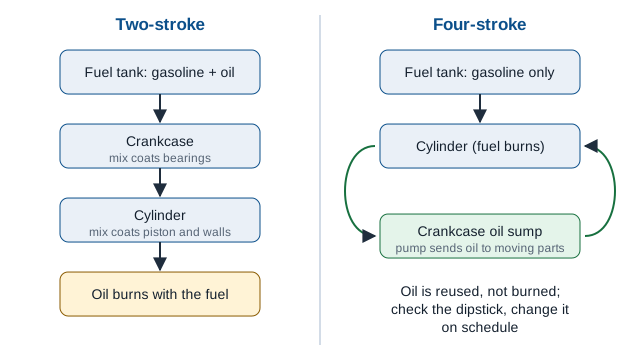
In a two-stroke engine the fuel-air mixture passes through the crankcase on its way to the cylinder. Because the crankcase is part of the intake path, it cannot hold a pool of oil the way a car engine does.
Instead, oil travels with the fuel. As the mixture flows through the crankcase and into the cylinder, the oil coats the crankshaft bearings, connecting rod, piston and cylinder walls. It is then burned with the fuel.
Premix and oil injection
Older and smaller two-strokes use premix: you add two-stroke oil to the gasoline yourself, at the ratio the manufacturer specifies (for example 50:1).
Many two-strokes have oil injection instead: a separate oil tank and a pump that meters oil into the fuel automatically. The oil still ends up mixed with the fuel; you just do not mix it by hand. Keep the oil tank filled.
Use oil made for two-stroke outboards (look for the NMMA TC-W3 certification) and follow the owner's manual.
How a four-stroke is lubricated
A four-stroke outboard keeps its oil in a crankcase sump. A pump circulates the oil to the moving parts and it drains back to the sump to be used again. The fuel tank holds plain gasoline.
Check the oil level with the dipstick before going out, and change the oil and filter on the schedule in the owner's manual.
What happens if you get it wrong
A two-stroke run without oil in its fuel loses lubrication within minutes: the piston and bearings overheat and can seize, which usually means a major repair.
Putting two-stroke oil into a four-stroke's fuel is not how a four-stroke is lubricated, and a four-stroke run low on sump oil can be damaged the same way. Always check which type of engine you have before fuelling.